
The Work Table
The Work Table is the plan of work, written down before the run as a list of items with sizes, dependencies and releases. It is the one element the Software lens adds that is genuinely new, not a renamed version of something else.
Opening it
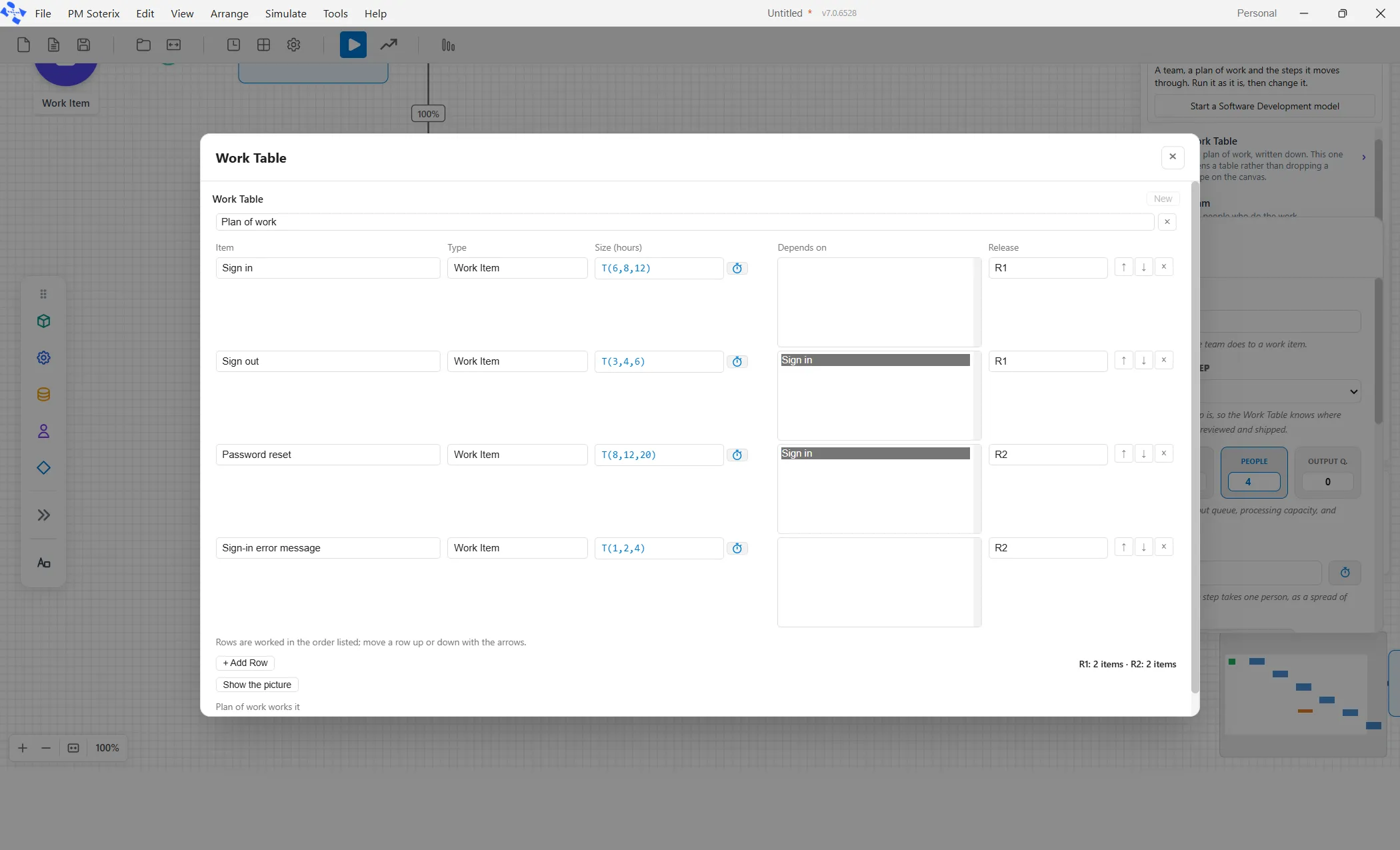
Section titled “Opening it”The Work Table tile does not drop a shape on the canvas. It opens a window titled Work Table. The window has no OK and no Cancel: every keystroke is already in the model. Close it with the close button or the Escape key, and one press of Ctrl+Z undoes an edit.
The columns
Section titled “The columns”Each row is one work item, across five columns.
- Item, the name of the item.
- Type, which must match a work item element on the canvas letter for letter.
- Size (hours), the effort as a spread.
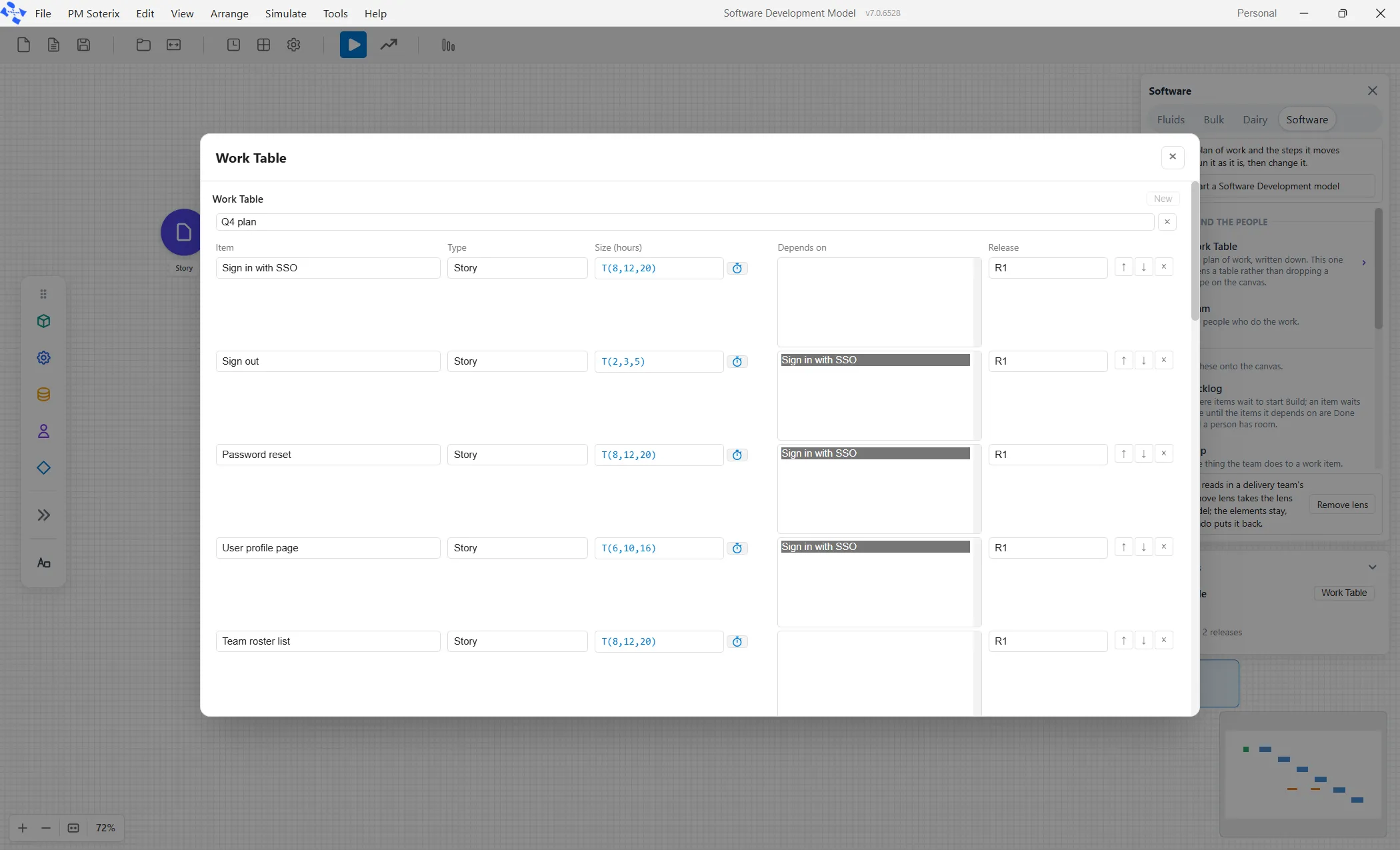
- Depends on, chosen from the rows you have already typed.
- Release, the release the item ships in.
The four rules
Section titled “The four rules”The window enforces four rules, and each one catches a real mistake.
Row order is priority. Use the up and down buttons on a row to move it; the team works down the list.
Depends on names other rows. An item waits in the Backlog until every row it names is Done.
Release is filled on every row or on none, and an item may not depend on something in a later release, because it would wait forever. Both are refused before the run, not during it.
Feeding it into the model
Section titled “Feeding it into the model”The plan enters the model through the arrival: an arrow from the work item element into the Backlog, whose kind is Work Table. Its Pace decides how the rows arrive. All at start puts every row into the Backlog on day one, in row order. N per sprint feeds a few rows at a time, for a team that plans sprint by sprint.