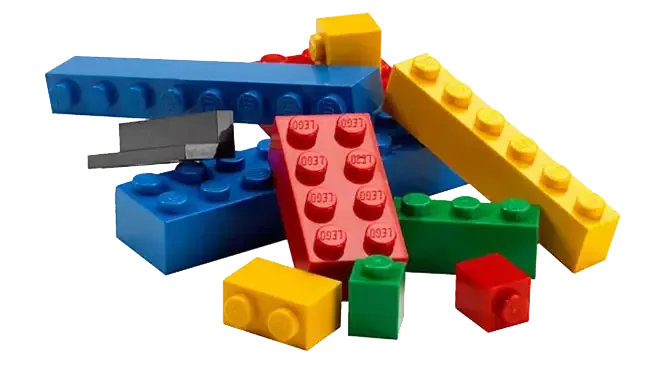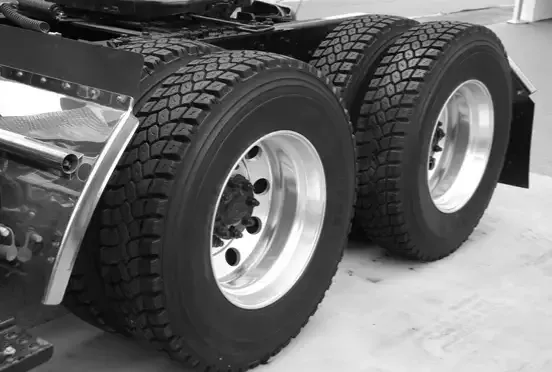


Two new manufacturing assembly model objects are now available: Import and Overall Flow, and Manufacturing Planner. Used together, they handle intermittent assembly systems, the kind that can produce many different products on the same line. Each product may need different quantities or types of subassemblies, the assembly times change, and even the resource assignments can change from one product to the next.
Simplify the creation of intermittent assembly models
Intermittent assembly models are hard to build, mostly because few people know how to approach such a multifaceted problem. These manufacturing assembly model objects take on that complexity for you. They handle the scheduling of product orders, the creation of the needed attributes and variables, the assembly of variable components, and the collection of cost and value-adding statistics from the subassemblies.
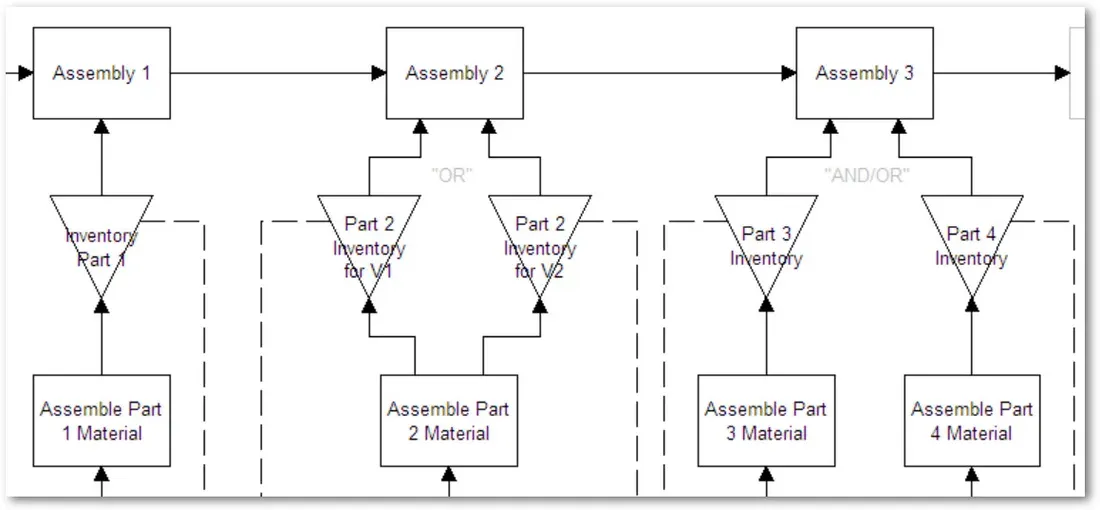
Models that took weeks now take minutes
Models that would once have taken weeks to build can be assembled in minutes with the new objects. A computer server manufacturer, for example, used them to create an assembly line for a medium-volume, highly variable product. A single server build can include:
- 3 sizes of enclosures
- 6 processor options
- 8 power options
- 6 memory options
- 24 local storage options
- 8 graphics card options
- 4 socket options
- 8 adapter options
- 4 RAID controllers
- 9 software options
That flexibility creates millions of possible configurations, and each configuration carries its own production time and time variability. Despite the millions of combinations, the speed of model development let the team test many different assembly systems: pre-assembly of some components, kitting followed by assembly at one station, work cell assembly, an assembly line, and pod assembly. In the past, building that many different systems would simply have taken too long. The model objects handle the scheduling of product orders and the variability of assembly components automatically.
Built for many types of assembly
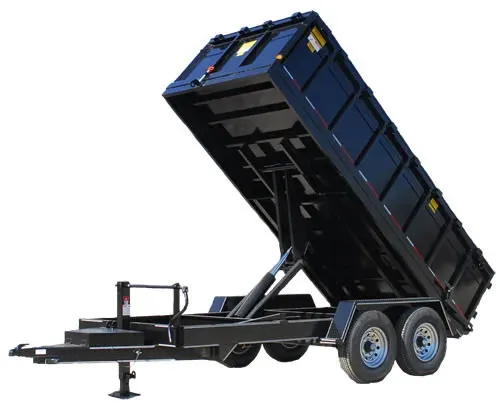
These objects are not just for computer systems. The same approach is central to building trailers, assembling trucks, and the cellular assembly of valves. The objects are flexible and simple to apply across many different assembly systems, and choosing the right structure for the work is part of improving the process itself.
The manufacturing assembly model objects are another step toward shorter model creation time and higher-quality model building. To see how they fit your line, explore what ProcessModel can do.